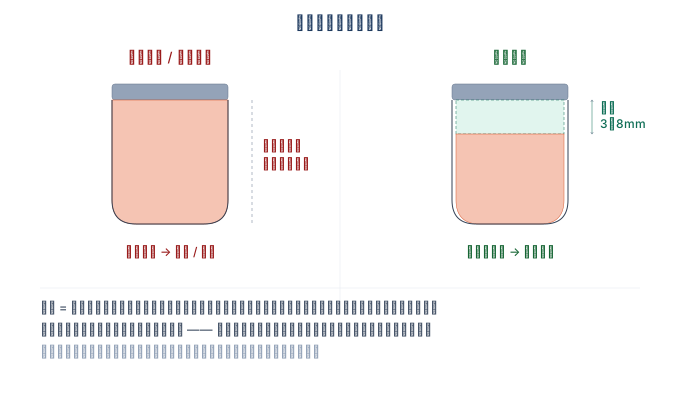
顶隙(Headspace)是罐头行业的一个基础参数:装罐后、封盖前,内容物顶面到瓶盖内底面之间的这一段垂直距离。它在标准里的正式说法叫「顶隙」或「头部空间」。
看起来只是「少装一点」这么简单,实际上它同时影响三件事:能不能抽到要求的真空度、杀菌时会不会胀罐、以及储存期间内容物会不会变质。装多了、装少了,问题都会在杀菌或储存阶段才暴露出来,那时候一整批货已经做完了。
一、顶隙为什么重要
1. 它是抽真空时气体排出的通道
抽真空的过程,是瓶内气体经由盖子与瓶口的缝隙流向真空室,直到内外气压平衡。如果内容物装到瓶口,气体没有聚集的空间,抽真空时会带动内容物外溢,物料夹在瓶口与盖胶之间,密封就会失效。
这一点在实际生产中很常见:瓶子表面看是封好了,真空度检测却总差一点,或者放置几天后真空消失。查来查去,问题出在装罐量。
2. 它给内容物受热膨胀留出缓冲
杀菌时内容物受热膨胀。如果顶隙过小甚至没有顶隙,膨胀没有空间缓冲,压力只能作用于瓶盖和瓶身,可能出现顶盖、跳盖,严重时瓶身破裂。
这就是所谓的「物理性胀罐」——不是微生物繁殖产气导致的,纯粹是热膨胀没地方去。
3. 它减少内容物与瓶盖的接触
内容物如果直接贴着盖内壁,酸性或含盐物料会长期作用于盖子的内涂层,加速腐蚀。留出顶隙能降低这种接触,对延长保质期有实际意义。
4. 它让旋盖这个动作能做得准
马口铁爪式旋开盖是靠盖子上的爪钩压住瓶口螺纹旋紧的。旋盖时盖子会有一个微小的下压和旋转过程。如果内容物顶到了盖底,盖子被顶住,旋紧的行程会受影响,爪钩可能压不到位。
二、顶隙留多少
顶隙不是越大越好。留多了,瓶内残留空气多,同样抽真空条件下能达到的真空度会偏低,而且瓶内空气多也不利于长期保存。留少了,前面说的膨胀和排气问题就来了。
| 装罐量情况 | 顶隙状态 | 可能出现的问题 |
|---|---|---|
| 装得过满 | 顶隙过小或无顶隙 | 杀菌时顶盖、跳盖、瓶身破裂;抽真空时物料外溢导致密封失效;爪钩旋不到位 |
| 装量合适 | 顶隙符合工艺要求 | 真空度容易达到;热膨胀有缓冲;密封稳定 |
| 装得过少 | 顶隙过大 | 瓶内残留空气多,真空度偏低;内容物少,影响产品规格一致性 |
三、常见疑问
四、小结
- 顶隙是内容物顶面到瓶盖内底面的距离,不是可有可无的余量;
- 它同时影响排气、抗热膨胀、防腐蚀和旋盖到位,四件事都靠它;
- 抽真空不能替代顶隙——气压可以抽低,体积变化依然存在;
- 顶隙过小的典型后果:杀菌顶盖、跳盖、瓶身破裂,抽真空时物料外溢污染密封面;
- 具体数值查相应产品标准或问食品工艺人员,不要凭感觉;
- 遇到真空度不达标,先换一批装罐量正常的瓶子排除装罐因素,再查机器。
The Importance of Headspace in Glass Jar Capping
Headspace is the vertical distance between the top surface of the contents and the inner bottom of the cap, after filling and before sealing. It looks like a trivial allowance, but it affects four things at once: how easily the required vacuum can be pulled, whether the jar survives thermal expansion during retorting, whether the contents corrode the cap lining, and whether the cap can be twisted down properly.
Why headspace matters
- Gas evacuation path. Vacuum is pulled as air inside the jar flows through the gap between cap and finish into the vacuum chamber. If contents are filled to the brim, there is no space for gas to collect, and material is drawn out and trapped between the finish and the cap gasket — the seal fails.
- Thermal expansion buffer. During retorting the contents expand. With little or no headspace, the pressure has nowhere to go and acts on the cap and bottle — lid lift, cap pop-off, or in severe cases bottle breakage.
- Less contact with the cap. Acidic or salty products in direct contact with the cap lining accelerate corrosion. Headspace reduces that contact and helps shelf life.
- Proper capping travel. Twist-off caps are secured by lugs pressing against the bottle thread. The cap needs a small downward and rotational travel. If contents press against the cap bottom, the sealing travel is compromised and the lugs may not seat correctly.
Do not skip headspace when using a vacuum pump. Pulling a vacuum lowers the internal pressure; it does not change the volume of the contents. During retorting they still expand, and the headspace is still needed as a buffer.
For specific values, refer to the applicable product standard for your category or consult a qualified food process engineer. Different products and retort processes differ widely. From the equipment side, as long as filling follows your process standard, our vacuum capping machines will reliably reach the set vacuum and seal correctly.
A quick way to tell whether it is a filling problem or a machine problem
Try a batch of jars filled to the correct level. If the vacuum then reaches the set point, the problem lies in the filling stage, not the machine. If it still will not reach vacuum, check the vacuum system for leaks.